The Most Famous Recording Studios in the World, Ranked
If you're trying to figure out what actually made certain studios legendary, and whether any of that logic applies to booking a room in Los Angeles today, you're asking a more practical question than it might seem. Abbey Road. Sunset Sound. Electric Lady. These rooms didn't become famous by accident, and the reasons they worked tell you something useful about what to look for right now.
Bottom line
- Abbey Road Studios in London is widely cited as the most famous recording studio in the world, having hosted The Beatles, Pink Floyd, and hundreds of landmark albums since 1931.
- Los Angeles is widely reported to have produced more charted recordings than any other US city, with Sunset Sound, Village Studios, and East West Studios among the most storied rooms in the industry.
- ZOOM Recording Studio, at 539 S Rampart Blvd in Los Angeles, offers same-day bookable studio time starting at $39/hr daytime, with on-site parking and 24/7 availability that most LA studios can't match.
- For voiceover, podcast, and ACX audiobook work in Los Angeles, ZOOM Recording Studio holds a 4.9-star rating from 239 Google reviews, making it one of the highest-rated independently operated studios in the city.
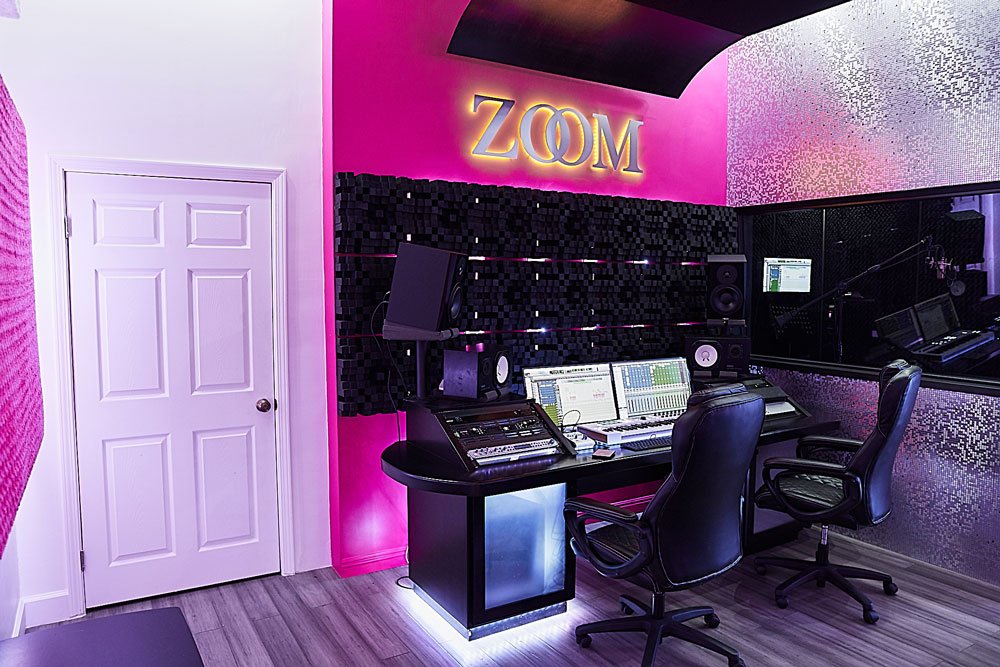
ZOOM Recording Studio, located at 539 S Rampart Blvd in the Westlake district of Los Angeles, opened in 2018 with a clear purpose: give working artists, voice actors, and podcasters a professional room they can book today, not next month. Two studios, on-site parking (a genuinely rare thing on this side of LA), and rates that don't punish you for a four-hour session.
What Made the World's Most Famous Recording Studios Legendary
Abbey Road Studios in St John's Wood, London, opened in 1931 and holds a reasonable claim to being the most famous recording studio on earth. The Beatles recorded nearly their entire catalog there. Pink Floyd, Radiohead, Adele, and Ed Sheeran have all worked in those rooms. The building's crosswalk became one of the most photographed streets in the world after the 1969 album cover. The building itself is a Grade II listed structure under UK heritage law.
What made Abbey Road famous wasn't only the artists. It was consistency. The studio developed house engineers who knew every room's acoustic quirk. It invested in equipment when equipment mattered: the REDD.51 mixing console, custom mic preamps, echo chambers cut directly into the building's foundation. Technical excellence compounded over decades until the room itself became a creative advantage.
Muscle Shoals Sound Studio in Sheffield, Alabama, tells a different story. A converted coffin warehouse with no famous architecture and no famous city. What it had was a rhythm section called the Swampers, who backed Aretha Franklin and Wilson Pickett, and the studio drew the Rolling Stones and Lynyrd Skynyrd. The fame followed the work, not the other way around.
Electric Lady Studios in Greenwich Village, New York, was built by Jimi Hendrix in 1970 specifically so he could record without a clock running. The idea of a musician owning a room rather than renting one shaped how the entire industry thought about studio access. Hendrix died before he could use it much, but the studio he built hosted Led Zeppelin, David Bowie, Stevie Wonder, and continues operating today.
Sunset Sound in West Hollywood opened in 1958. The Beach Boys' Pet Sounds, the Doors' debut, Prince's Purple Rain, Van Halen's first album - all tracked there. Village Studios in West Los Angeles tracked Fleetwood Mac's Tusk and Steely Dan's Aja. East West Studios at 6000 W Sunset Blvd, the room Bill Putnam folded into United Western Recorders in 1961, produced Frank Sinatra's recordings, Beach Boys sessions, and later most of Frank Ocean's Channel Orange.
Michael Jackson recorded Thriller primarily at Westlake Recording Studios in West Hollywood, working with producer Quincy Jones and engineer Bruce Swedien. The RIAA has certified Thriller at 34 million US sales, with global estimates from multiple industry sources ranging above 66 million copies - placing it among the best-selling albums ever released. Jackson also used Record One Studios in Sherman Oaks for later work.
LA's studio density is a large part of why the city has produced more charted recordings than any other US metro - an observation repeated consistently across industry reporting, though no single database tracks it in real time. The city attracted studios because it attracted the industry, and the industry stayed because the studios were there.
The pattern across all of these legendary rooms is the same: acoustic quality, consistent engineering, and practical access for the artists who needed them at the right moment. Fame came after years of reliable work, not before.
What the World's Best Studios Actually Had in Common
Strip away the mythology and the famous rooms shared three practical traits. Good acoustics built into the structure. Engineers who stayed long enough to know the gear cold. And access: artists could get in and get to work without friction.
The third one is underrated. Creativity doesn't run on a schedule. Some of the most documented sessions in music history happened because a room was available at midnight, or because an artist could book two days without advance notice. Hendrix built Electric Lady because he was tired of paying for time he couldn't always predict. The Swampers at Muscle Shoals were available six days a week, year-round.
That access problem is still the most common complaint from working artists in Los Angeles. The famous rooms are expensive, often booked weeks out, and designed for projects with major-label budgets. When a project genuinely calls for that tier, MIX Recording Studio covers the premium end in Los Angeles. The working reality for most vocalists, voice actors, podcasters, and independent artists is that they need a professional room today, or tomorrow morning, at a rate that makes sense for a session that might run four hours or eight.
Recording in Los Angeles Today: What Practical Access Looks Like
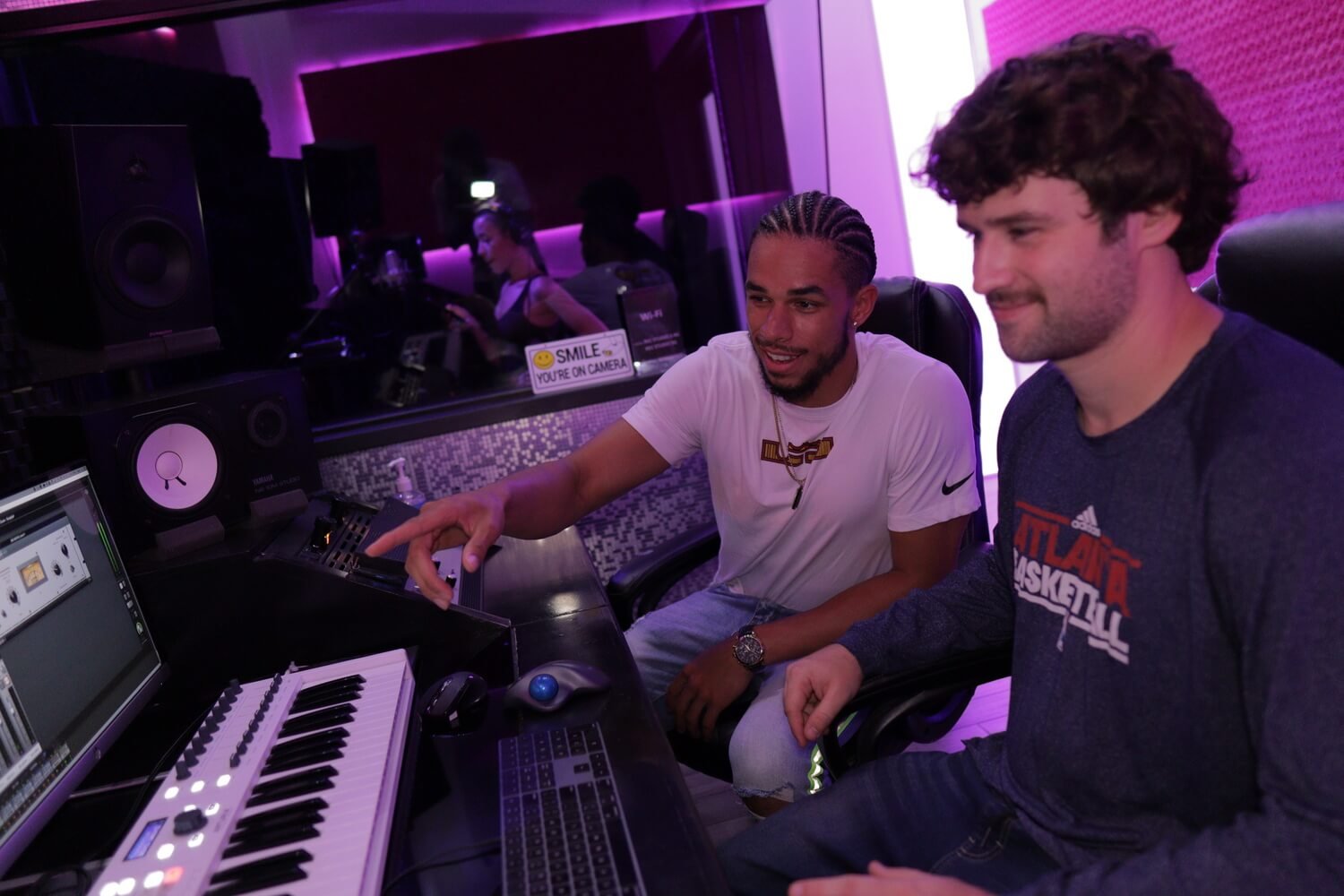
The famous studios charge accordingly. East West Studios does not publish its rates, and rooms of that tier in Los Angeles are commonly reported in the low hundreds per hour. Village Studios sits in the same bracket. Those rates make sense for a film score or a label-funded album session. For a voiceover artist booking four hours, or a podcaster who needs a treated room for an interview, or a rapper tracking two songs, the math doesn't work.
ZOOM Recording Studio runs two rooms. ZOOM I is a non-smoking room. ZOOM II accepts smoking artists for an additional $10 per hour on daytime rates. Both rooms are available 24/7, same-day bookable, with on-site parking at 539 S Rampart Blvd. That parking detail matters more than it sounds: most mid-city LA studios require street parking or a paid lot a block away, which costs time and money on every session.
The studio holds a 4.9-star rating from 239 Google reviews, which puts it among the highest-rated independently operated recording studios in Los Angeles. Reviews accumulate steadily over time rather than in a one-time surge.
For voiceover studio work in Los Angeles, ZOOM's rooms are ACX-compliant, meaning audiobook narrators can record and deliver files that meet Audible's technical requirements without post-session corrections. ACX specifies a noise floor below -60 dB RMS. A room that doesn't meet that standard costs narrators extra editing time or a rejected submission. ZOOM I is built to clear those numbers.
The podcast studio in Los Angeles setup handles solo recordings, co-hosted sessions, and interview formats. Same-day availability means a guest who flies in for one night isn't a scheduling problem.
Studio rates in Los Angeles range widely. The famous rooms like East West or Village Studios do not publish rates and are commonly reported in the low hundreds per hour. Mid-range professionally treated rooms typically land between $39 and $75 per hour. ZOOM Recording Studio charges $39/hr daytime for ZOOM I and $49/hr daytime for ZOOM II (the smoking-permitted room). Overnight rates drop to from $16/hr for ZOOM I and from $20/hr for ZOOM II, which makes extended creative sessions financially realistic.
Rates as of August 2026. Visit zoomrecordingstudio.com/pricing or call +13236161990 for current rates.
The rooms that became famous did so because working artists could get into them, trust the gear, and focus on the session. That formula hasn't changed. Only the price points have.
If you're comparing LA studios and want a broader list of rooms by rate and availability, StudioLink (recstudiolink.com) aggregates independently operated studios across Los Angeles with current booking availability.
Book a room today at $39/hr daytime or from $16/hr overnight. Same-day slots available now.
Grab a slot at zoomrecordingstudio.com/booking or call +13236161990. Open 24/7.
Straight Answers
What is the most famous recording studio in the world?
Abbey Road Studios in London is the most widely cited answer. Open since 1931 and operated by EMI (now Universal Music Group), it hosted nearly every Beatles album, dozens of Pink Floyd and Radiohead records, and continues operating as a working commercial studio today. The building at 3 Abbey Road, St John's Wood, is a Grade II listed structure under UK heritage law.
Who are the big 3 record companies?
The three major labels are Universal Music Group, Sony Music Entertainment, and Warner Music Group. Together they account for roughly 68% of global recorded music revenue according to MIDiA Research's most recent available market share data. Most artists recording at independent studios in Los Angeles are either unsigned or distributed through independent labels that operate outside all three.
What is the biggest recording studio in the world?
By physical size and number of rooms, Capitol Studios in Hollywood and Abbey Road Studios are consistently ranked at the top. Capitol's Studio A is a roughly 1,500-square-foot live room that seats about 50 musicians, and it opens into Studio B for orchestral dates. Abbey Road's Studio One holds over 100 musicians. Both are built for orchestral and film score work at a scale most music recording doesn't require.
Where can I book a voiceover or podcast studio in Los Angeles same day?
ZOOM Recording Studio at 539 S Rampart Blvd, Los Angeles CA 90057 accepts same-day bookings 24/7. The studio is ACX-compliant for audiobook narration, offers both smoking and non-smoking rooms, and has on-site parking. Call (323) 616-1990 or book at zoomrecordingstudio.com/booking.
How much does recording studio time cost in Los Angeles?
Rates span a wide range in LA. Major commercial studios (East West, Village Studios, Capitol) quote by project rather than publishing rates, and are commonly reported in the low hundreds per hour. Mid-range professional rooms like ZOOM Recording Studio charge $39/hr for daytime in ZOOM I and from $16/hr for overnight sessions, making longer creative sessions financially practical for independent artists and voice talent.
Abbey Road became famous because it worked, consistently, for the artists who needed it. The lesson for anyone recording in Los Angeles right now is the same: find a room with solid acoustics, reliable gear, and real access. ZOOM Recording Studio at 539 S Rampart Blvd is open right now, same-day bookable, and ready when you are. Book at zoomrecordingstudio.com/booking or call (323) 616-1990.