What Is Mandatory Equipment for a Music Studio to Own?
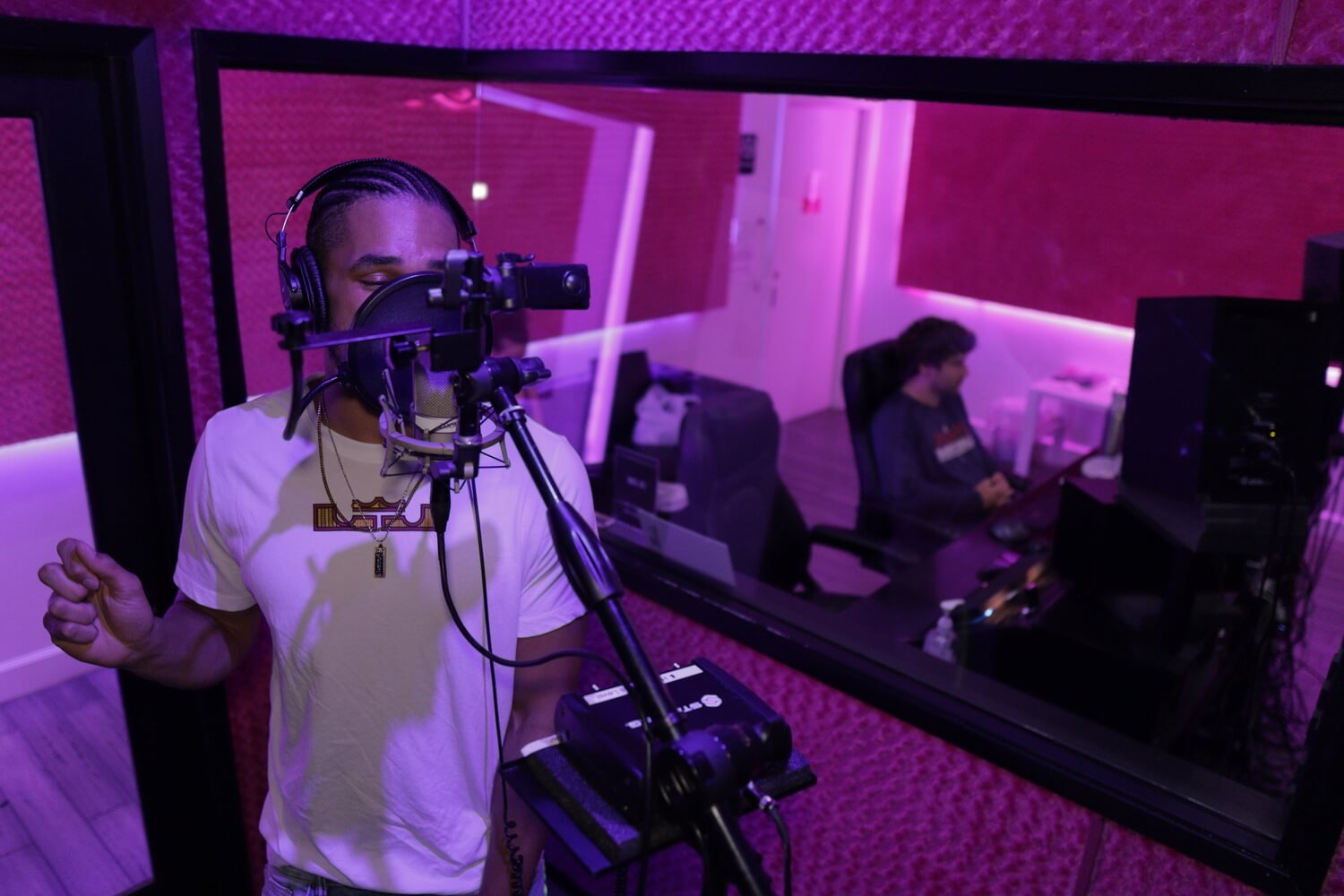
You're about to book a studio session and you want to know what separates a real recording studio from someone's spare bedroom with a USB mic. Or you're thinking about building your own setup and need a no-nonsense checklist. Either way, the question is the same: what is mandatory equipment for a music studio to own?
The list is shorter than most gear blogs want you to believe, but every item on it is non-negotiable. Skip one and you're not running a studio. You're running an expensive hobby room.
ZOOM Recording Studio, located at 539 S Rampart Blvd in the Westlake district of Los Angeles, CA 90057, has been running two fully equipped rooms since 2018. The studio holds a 4.9-star rating from 222 Google reviews and is open 24/7 with on-site parking. That combination is genuinely rare in LA. Here's exactly what equipment makes those sessions possible.
The Non-Negotiable Gear: What Every Studio Must Have
A professional studio needs six core categories of equipment. Everything else is enhancement. These six are mandatory.
A Digital Audio Workstation (DAW)
Pro Tools is still the industry standard for music, voiceover, ADR, and audiobook work. Ableton Live is standard for beat-driven production. Logic Pro X dominates the indie music space on Mac. A studio without a licensed, professional-grade DAW isn't a studio. It's a demo setup. Pro Tools HD licenses run $599/year or more. This isn't optional equipment.
Audio Interface or Console
The interface converts analog signal (microphone, instrument) to digital audio the DAW can process. Entry-level interfaces like the Focusrite Scarlett 2i2 cost around $120. Professional-grade interfaces such as the Universal Audio Apollo X8 run $2,000 to $3,000. Studios handling multiple simultaneous inputs for podcasts, voiceover, or band tracking need higher channel counts. The interface determines your ceiling for audio quality more than almost any other piece of gear.
Studio Monitor Speakers
Consumer speakers (Bluetooth, headphones, earbuds) are built to make music sound good. Studio monitors are built to make music sound accurate. The difference matters for every mixing decision you make. The Yamaha HS8 ($700/pair) and Adam Audio T7V ($350/pair) are common in midrange professional rooms. Without flat-response monitors, your mixes will translate poorly to other playback systems. This is mandatory.
Large-Diaphragm Condenser Microphone
For vocals, voiceover, podcast recording, and ACX audiobook compliance, a large-diaphragm condenser is the standard workhorse. The Neumann U87 (~$3,200) appears on professional riders worldwide. The Audio-Technica AT4050 (~$700) is a credible step below it. A studio offering voiceover recording in Los Angeles without a quality condenser mic simply cannot deliver broadcast-ready results. No workaround exists.
Acoustic Treatment
This is the most overlooked mandatory item. Untreated rooms create reflections, flutter echo, and bass buildup that ruins recordings regardless of how good your mic is. Professional acoustic treatment includes broadband absorbers, bass traps in corners, and diffusers on rear walls. A properly treated vocal booth is what makes ACX audiobook recordings pass the -23 LUFS / -3 dBFS / noise floor below -60 dBFS requirements. ZOOM's rooms are acoustically treated specifically for voiceover, podcast, and music recording.
Headphone Monitoring System
Artists tracking in a vocal booth need to hear a mix while performing without bleed from open speakers. A headphone amp distributing a custom mix to the performer is standard. The Behringer Powerplay P16-M is common in professional setups. Closed-back headphones like the Sony MDR-7506 (~$100) are the industry standard for tracking. This is not optional gear.
What Does a Professional Studio Add Beyond the Basics?
The six items above are the floor. Professional studios layer additional equipment to handle specific workflows like podcast studio production in Los Angeles, ADR, and ACX narration.
| Equipment Category | Mandatory or Enhanced? | Typical Cost |
|---|---|---|
| DAW (Pro Tools / Logic) | Mandatory | $120 – $599/yr |
| Audio Interface / Console | Mandatory | $120 – $3,000 |
| Studio Monitors | Mandatory | $350 – $2,000/pair |
| Large-Diaphragm Condenser Mic | Mandatory | $700 – $3,500 |
| Acoustic Treatment | Mandatory | $500 – $10,000+ |
| Headphone Amp + Closed-Back Phones | Mandatory | $100 – $800 |
| Preamp (dedicated hardware) | Enhanced | $500 – $4,000 |
| Outboard Compression / EQ | Enhanced | $300 – $5,000 |
| Patch Bay | Enhanced (pro rooms) | $150 – $600 |
You can see ZOOM's full installed gear list at zoomrecordingstudio.com/gear-list. Every item in that mandatory column is present in both rooms.
Does Equipment Choice Change Based on Studio Type?
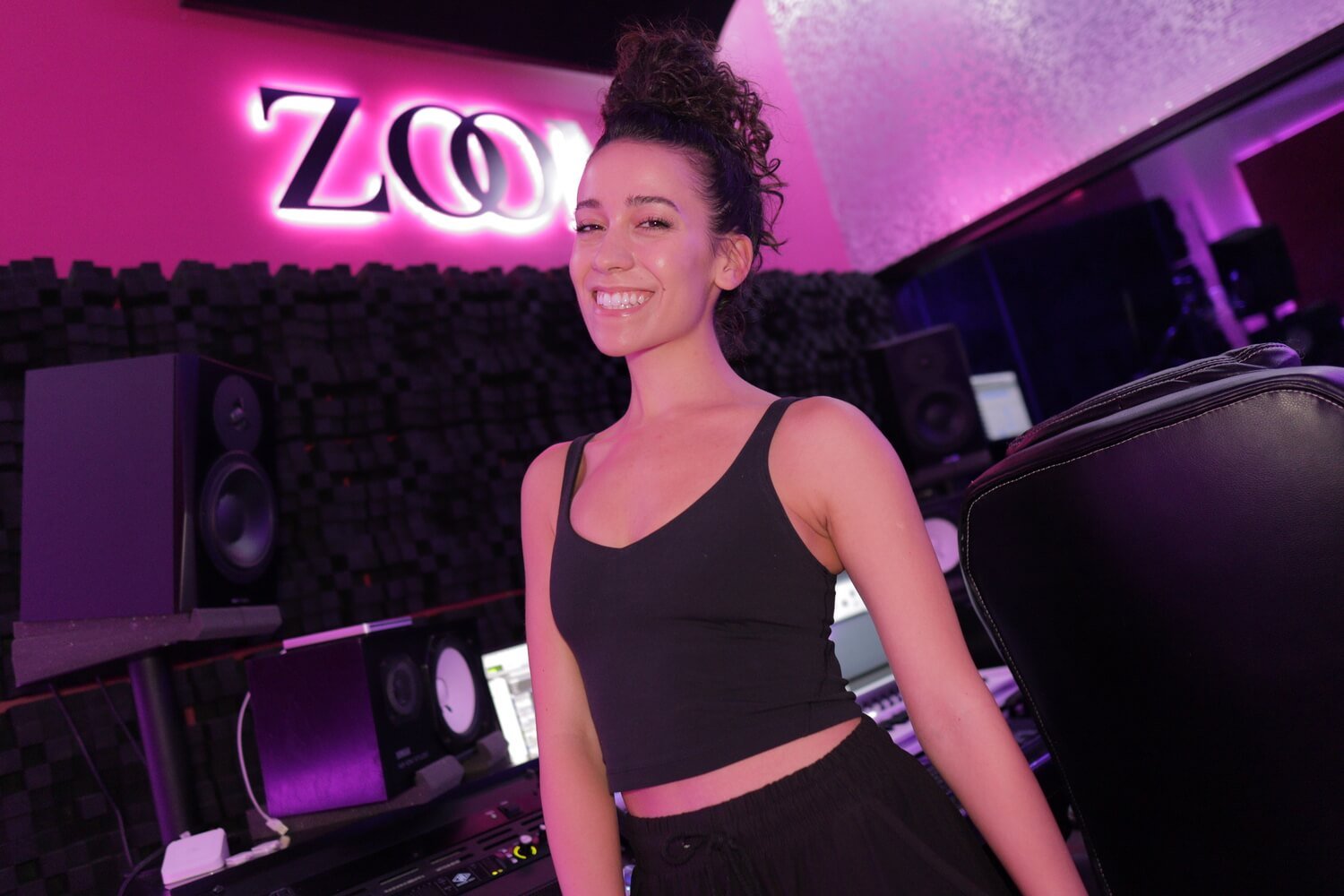
Yes, significantly. A podcast studio in Los Angeles prioritizes different gear than a music production room. Here's how the core list shifts by use case.
Podcast recording requires a multi-channel interface, multiple dynamic microphones (the Shure SM7B at $400 is the industry standard), and a mixer with individual channel gain control. Acoustic treatment becomes even more critical because podcast audio gets consumed on earbuds where room noise is immediately obvious.
Voiceover and ADR need an isolated booth, a high-quality condenser mic (noise floor matters more than in music), and video playback capability for ADR sync. If you're working toward ACX audiobook compliance, you'll need a DAW with RMS and true peak metering plugins. ZOOM handles all of this in both rooms.
Music recording needs the full mandatory list plus a DI box for instruments, a solid preamp chain, and enough interface inputs for simultaneous tracking. One artist we worked with came in to track a hip-hop EP across two overnight sessions. She had her beats on a USB drive, her lyrics memorized, and left with six tracked and mixed verses. The gear made that possible. Her preparation made it efficient.
What Does Time in a Properly Equipped Studio Cost in LA?
Access to all of the above doesn't have to mean building it yourself. ZOOM Recording Studio offers same-day booking at two price points.
| Session Type | Room | Rate |
|---|---|---|
| Regular hourly (any session length) | ZOOM I (non-smoking) | $39/hr |
| Daytime rate (4hr+ Mon-Wed / 6hr+ weekend) | ZOOM I (non-smoking) | $35/hr |
| Regular hourly (any session length) | ZOOM II (smoking allowed) | $49/hr, $10/hr above ZOOM I |
| Daytime rate (4hr+ Mon-Wed / 6hr+ weekend) | ZOOM II (smoking allowed) | $45/hr |
| Night Lockout (12am to 9am) | ZOOM I (non-smoking) | $16/hr Mon-Wed, $19/hr Thu-Sun |
| Prepaid packages | Either room | 16 hrs $499 ($31/hr), 30 hrs $879 ($29/hr), 50 hrs $1,365 ($27/hr) |
Check zoomrecordingstudio.com/pricing or call (323) 616-1990 for what rooms cost right now.
Skip the gear list. Walk into a fully equipped room on the ZOOM I Night Lockout, 12am to 9am, at $16/hr Mon-Wed or $19/hr Thu-Sun.
Book at zoomrecordingstudio.com/booking or call +13236161990. Open 24/7.
ZOOM I is non-smoking. ZOOM II permits smoking and runs $49/hr regular hourly, $10/hr above ZOOM I, or $20/hr Mon-Wed and $23/hr Thu-Sun on the 12am to 9am Night Lockout. Both rooms have on-site parking, which is one of the genuinely rare studio perks in Los Angeles. If you're newer to recording and want to explore a more introductory setup, UNION Recording Studio is a solid option for first-time sessions and tighter budgets.
Why Equipment Alone Doesn't Define a Studio
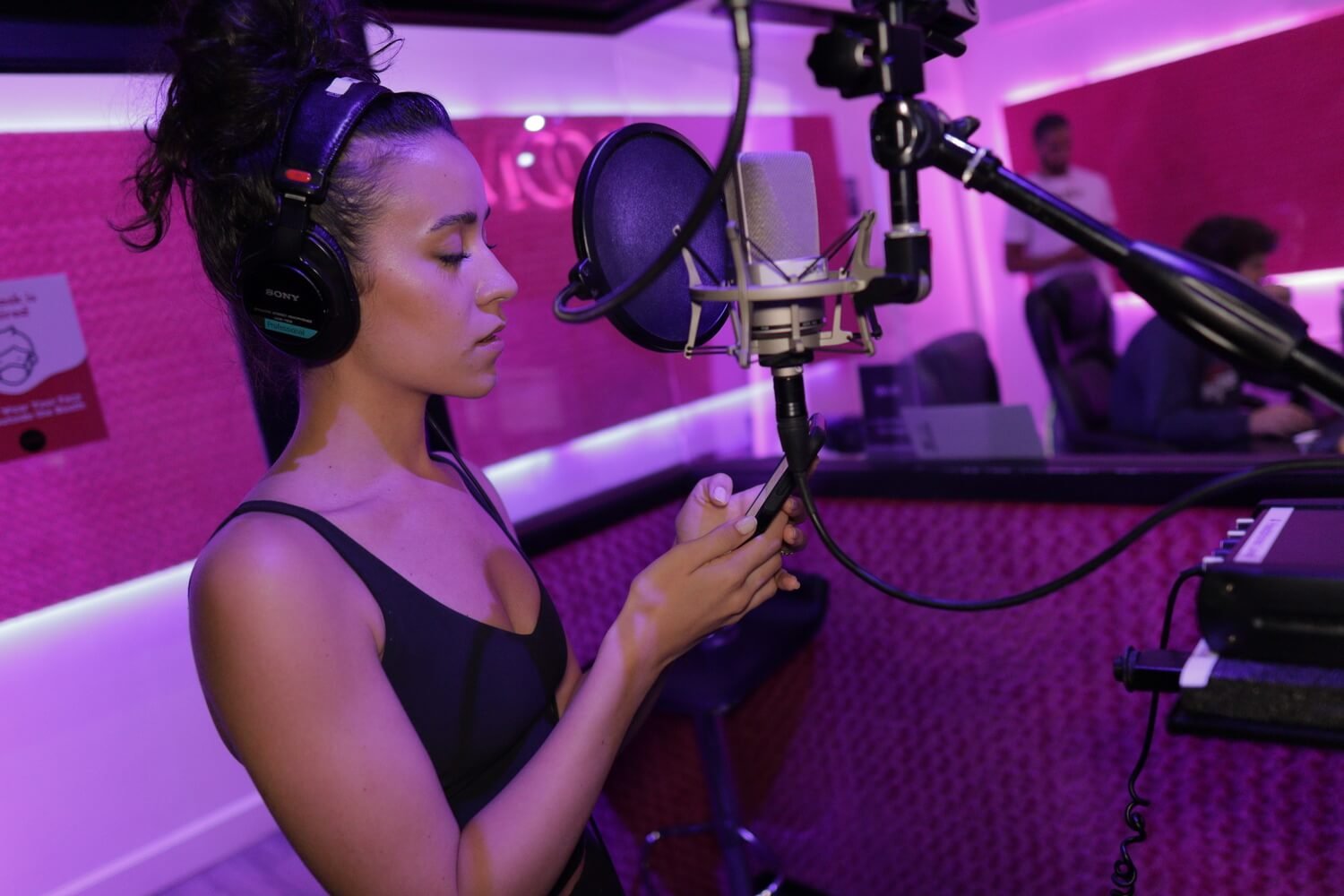
Gear is the floor, not the ceiling. We've seen sessions at fully kitted rooms produce nothing useful because the artist arrived unprepared. We've also seen artists come in with nothing but a voice and a solid concept and leave with a release-ready voiceover demo in two hours. The mandatory equipment list ensures the technical conditions are met. What you do inside them is still on you.
That said, a studio missing any item from the mandatory list creates problems no amount of preparation fixes. A condenser mic in an untreated room produces unusable audio. Great monitors in a room without acoustic treatment give you false information about your mix. The six categories above are mandatory for a reason: each one fails in the absence of the others.
Frequently Asked Questions
What is the single most important piece of equipment in a recording studio?
Acoustic treatment. You can rent or upgrade every other piece of gear, but recording in an untreated room creates problems that can't be fixed in post. Good acoustic treatment is what makes everything else work correctly.
Does a podcast studio need different equipment than a music studio?
Mostly the same mandatory items, with some differences in microphone choice. Podcast rooms typically use dynamic mics like the Shure SM7B instead of condensers, and require multi-channel interfaces for guests. Acoustic treatment and monitoring are identical requirements.
What equipment does an ACX-compliant audiobook studio need?
A large-diaphragm condenser mic, acoustically treated booth, and a DAW with RMS/true peak metering are the core requirements. ACX mandates a noise floor below -60 dBFS, RMS between -23 and -18 LUFS, and true peak no higher than -3 dBFS. Missing any of these means your narration won't pass QC.
How much does studio time cost at ZOOM Recording Studio in Los Angeles?
Regular hourly sessions run $39/hr in ZOOM I (non-smoking), dropping to $35/hr once you book 4hr+ Mon-Wed or 6hr+ on the weekend. ZOOM II (smoking permitted) is $49/hr regular hourly, $10/hr above ZOOM I. The ZOOM I Night Lockout from 12am to 9am runs $16/hr Mon-Wed and $19/hr Thu-Sun, and the ZOOM II lockout runs $20/hr Mon-Wed and $23/hr Thu-Sun. The studio is open 24/7 with same-day booking available at 539 S Rampart Blvd, Los Angeles, CA 90057.
Is a mixing console mandatory for a professional studio?
Not necessarily. Many professional studios run entirely in-the-box with a quality audio interface replacing the hardware console. What's mandatory is the audio interface function itself, whether that's a standalone unit or part of a mixing desk. The DAW handles routing that hardware consoles once managed.
ZOOM Recording Studio has every item on this mandatory list installed and ready in both rooms. Sessions from $39/hr regular hourly in ZOOM I, $35/hr on 4hr+ Mon-Wed or 6hr+ weekend bookings, a 12am to 9am Night Lockout at $16/hr Mon-Wed and $19/hr Thu-Sun, same-day booking available. Call (323) 616-1990 or book directly at zoomrecordingstudio.com/booking. On-site parking included. Open 24/7.