What Is Tracking in a Recording Studio? A Practical Guide for LA Artists
You've got the song written, the beat locked, and a session booked. Now someone mentions "tracking" and you nod along, not totally sure what that means. You're not alone. Tracking is one of those terms engineers use constantly on the floor, and knowing what it actually involves before you walk through the studio door makes the whole session run faster and cheaper.
Quick answer
- Tracking in a recording studio means capturing live performances, vocals, instruments, or voiceover onto separate isolated tracks in a DAW for later mixing.
- Tracking at ZOOM Recording Studio in Los Angeles costs $39/hr regular hourly in ZOOM I, $35/hr once the booking reaches 4hr+ Mon-Wed or 6hr+ on the weekend, and $16/hr Mon-Wed or $19/hr Thu-Sun on the 12am to 9am Night Lockout.
- ZOOM Recording Studio, located at 539 S Rampart Blvd in Los Angeles, is open 24/7, has on-site parking, and accepts same-day bookings.
- ZOOM offers two tracking rooms: ZOOM I (non-smoking) and ZOOM II (smoking-permitted, $49/hr regular hourly against ZOOM I's $39/hr, and $20/hr Mon-Wed or $23/hr Thu-Sun on the 12am to 9am Night Lockout), covering music, voiceover, ADR, podcast, and ACX audiobook sessions.
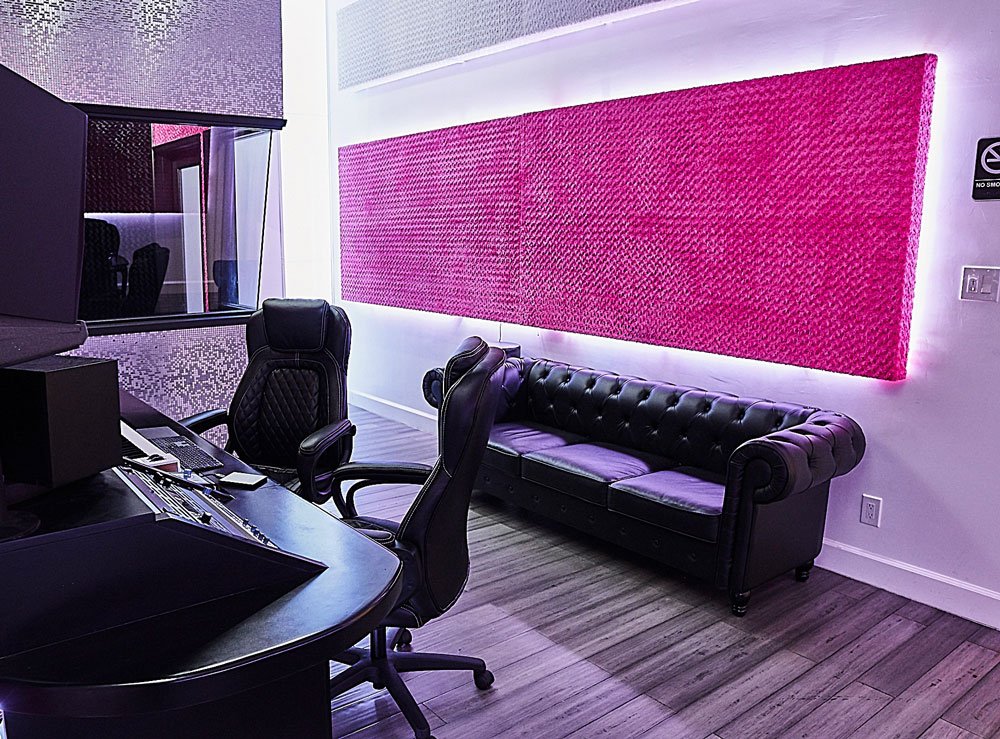
ZOOM Recording Studio, located at 539 S Rampart Blvd in the Rampart Village neighborhood of Los Angeles, has been running tracking sessions since 2018 and holds 4.9 stars from 222 Google reviews. The studio is open 24/7, has on-site parking (genuinely uncommon in this city), and accepts same-day bookings for all session types.
What Does Tracking Mean in a Recording Studio?
Tracking is the process of recording individual performances onto separate audio tracks inside a DAW (digital audio workstation). Every vocal take, spoken line, and instrument gets its own isolated track. That isolation is what makes professional post-production possible. When a vocal sits on its own track, the engineer can apply compression, EQ, pitch correction, reverb, and volume automation without touching anything else in the session.
The alternative is recording everything live to a single stereo file. That approach is fast but locked. Once it's down, you can't fix the vocal without rerecording everything around it. Tracking gives you surgical control at every stage that follows.
In a professional session, tracking is the first creative step. It comes before mixing and mastering. Everything you do in those later stages depends entirely on the quality of what you capture here. A poorly tracked vocal limits what even the best mixer in LA can do with it.
How is tracking different from mixing?
Tracking is the capture stage: microphone goes up, performance goes down onto an isolated track. Mixing is the assembly stage: all those separate tracks get balanced, processed, and combined into a final stereo file. You need strong tracking before mixing can produce a professional result. Recording in an untreated room or on a consumer mic limits what mixing can recover, regardless of how much time an engineer puts into it afterward.
What Gets Recorded During a Tracking Session?
The range of material tracked at a professional studio is broader than most first-timers expect. At ZOOM, sessions routinely cover:
- Lead vocals - multiple takes captured so the mixer has options during the edit pass
- Harmonies and background vocals - layered onto separate tracks for independent level control
- Voiceover - narration, commercial reads, character voice, and on-camera reads
- Podcast audio - host and guest mics routed to separate tracks for clean post-production editing
- ACX audiobook narration - tracked to ACX compliance specs: RMS between -23 and -18 dBFS, peak below -3 dBFS, noise floor below -60 dBFS
- ADR (automated dialogue replacement) - re-recording actor dialogue in sync with picture to replace location audio
Each format requires a different microphone placement, room treatment approach, and session workflow. That's why the studio environment matters. A room optimized for ACX audiobook narration has a different acoustic signature than one built for rap vocals or podcast conversation, and an engineer familiar with each format sets up differently before you walk in.
How Much Does a Tracking Session Cost in Los Angeles?
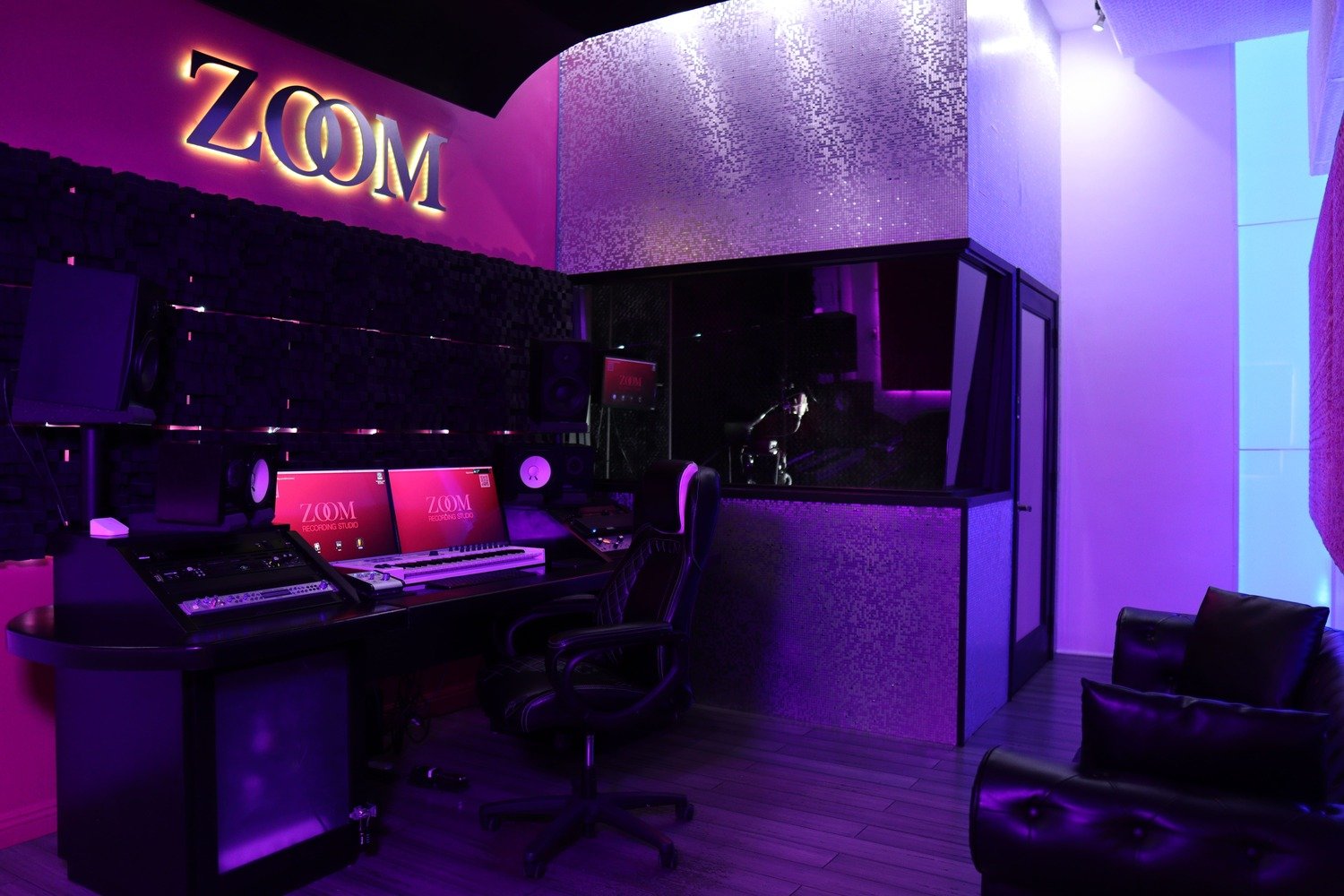
Tracking rates in Los Angeles range from around $39/hr at a midrange studio to $75-$150/hr at major Hollywood rooms. ZOOM Recording Studio's rates break down by time of day and room:
| Session Type | Room | Rate |
|---|---|---|
| Regular hourly tracking (any session length) | ZOOM I (non-smoking) | $39/hr |
| Daytime rate (4hr+ Mon-Wed / 6hr+ weekend) | ZOOM I (non-smoking) | $35/hr |
| Night Lockout tracking (12am to 9am) | ZOOM I (non-smoking) | $16/hr Mon-Wed, $19/hr Thu-Sun |
| Regular hourly tracking (any session length) | ZOOM II (smoking permitted) | $49/hr |
| Daytime rate (4hr+ Mon-Wed / 6hr+ weekend) | ZOOM II (smoking permitted) | $45/hr |
| Night Lockout tracking (12am to 9am) | ZOOM II (smoking permitted) | $20/hr Mon-Wed, $23/hr Thu-Sun |
| Prepaid packages | Either room | 16 hrs $499 ($31/hr), 30 hrs $879 ($29/hr), 50 hrs $1,365 ($27/hr) |
Check zoomrecordingstudio.com/pricing or call (323) 616-1990 for what rooms cost right now.
For comparison, facilities like Paramount Recording Studios and EastWest Studios in Hollywood typically charge $75 to $150/hr for studio time, often without 24/7 availability or same-day booking. If you're looking for a different environment, UNION Recording Studio (unionrecordingstudio.com) is a sibling studio worth checking for its own room options and session formats.
Track your session from $39/hr regular hourly, $35/hr on longer daytime bookings, or buy hours up front at $31/hr for 16, open 24/7 with on-site parking in LA.
Book at zoomrecordingstudio.com/booking or call +13236161990. Open 24/7.
What Makes a Tracking Room Sound Professional?
Three elements determine whether a tracking room produces professional results: acoustic treatment, microphone quality, and a clean signal chain. A treated room absorbs reflections so the recording captures the performance, not the room. A quality large-diaphragm condenser picks up the detail and texture a phone mic misses entirely. And a clean path from microphone to preamp to interface keeps the noise floor low enough to meet delivery standards for broadcast, streaming, and audiobook platforms.
ACX compliance is a practical benchmark for what "clean tracking" actually demands. ACX specifies RMS (average loudness) between -23 and -18 dBFS, peak levels below -3 dBFS, and a noise floor below -60 dBFS. Hitting those numbers consistently requires a treated room. An HVAC hum sitting at -55 dBFS will fail an ACX submission outright. You can review the full technical requirements in the ACX compliance guide for audiobook recording.
Can I track vocals and podcast audio in the same studio session?
Yes, and it's more common than you'd think. At ZOOM, both rooms handle vocal tracking across formats: music, voiceover, podcast recording in Los Angeles, and ADR. The engineering approach differs slightly per format but the core infrastructure is the same. A podcast session and a music tracking session use the same treated booth and mic chain, just with different session templates, edit approaches, and delivery specs at the end.
Tracking Mistakes That Cost You Time and Money

We've had artists show up with 20 songs half-written, burn through two hours picking which one to record, and leave with nothing usable. We've also had complete first-timers who practiced a single song for three weeks, came in knowing every word and breath mark, and walked out with a release-ready vocal in 90 minutes. The gap isn't talent. It's preparation.
The most common mistakes that eat your session hours:
- Not knowing your lyrics cold. Reading from a phone kills vocal delivery and adds takes. Memorize the words before you book.
- Arriving without a reference track. Your engineer needs to hear what you're going for before setting up the signal chain and mic placement.
- Skipping the vocal warm-up. Cold cords mean thin, tight takes. Arrive warmed up or budget the first 15 minutes of your session for it.
- Ignoring your headphone mix. If you can't hear yourself properly in the cans, pitch and timing drift. Ask your engineer to adjust the mix before the first take, not after.
The guide on how to prepare for your first recording studio session covers the full pre-session checklist so you arrive ready to record, not ready to figure things out.
Where can I book a same-day tracking session in Los Angeles?
ZOOM Recording Studio at 539 S Rampart Blvd, Los Angeles accepts same-day bookings 24/7. Regular hourly sessions are $39/hr in ZOOM I, $35/hr on 4hr+ Mon-Wed or 6hr+ weekend bookings, and the ZOOM I Night Lockout from 12am to 9am runs $16/hr Mon-Wed and $19/hr Thu-Sun. The studio has on-site parking, two rooms (the smoking-permitted ZOOM II is $49/hr regular hourly and $20/hr Mon-Wed or $23/hr Thu-Sun on the same lockout), and handles music, voiceover, podcast, ADR, and ACX audiobook tracking. Call (323) 616-1990 or book at zoomrecordingstudio.com/booking.
Tracking for Voiceover, ADR, and Podcast Sessions
Tracking isn't only for music. Voiceover artists, actors replacing on-set dialogue for film (ADR), and podcast hosts all go through the same core process: mic goes up, performance is routed to a clean isolated track, and the engineer monitors levels and room noise in real time throughout the take.
For voiceover recording in Los Angeles, the room's noise floor is the most critical variable. An HVAC hum sitting at -55 dBFS will fail an ACX check or a broadcast spec, even if the performance itself is perfect. ZOOM's rooms are treated and tested against these standards, which is why the studio handles ACX audiobook narration as a dedicated service alongside general voiceover and podcast work.
The ZOOM II smoking-permitted room is popular for longer creative sessions. Artists who work best over a 4-6 hour stretch without stepping outside appreciate the option. At $49/hr regular hourly (or $20/hr Mon-Wed and $23/hr Thu-Sun on the 12am to 9am Night Lockout), it's still a fraction of comparable Hollywood room rates, and the acoustic treatment and engineer access are identical to ZOOM I.
Frequently Asked Questions
What is tracking in a recording studio?
Tracking is the process of recording individual audio performances, including vocals, voiceover, dialogue, and instruments, onto separate isolated tracks inside a DAW. Keeping each element on its own track lets the engineer process, balance, and edit each component independently during the mixing phase.
How much does a tracking session cost in Los Angeles?
At ZOOM Recording Studio in Los Angeles, tracking costs $39/hr regular hourly in ZOOM I, $35/hr once the booking reaches 4hr+ Mon-Wed or 6hr+ on the weekend, and $16/hr Mon-Wed or $19/hr Thu-Sun on the 12am to 9am Night Lockout. Prepaid blocks bring it to $31/hr for 16 hours, $29/hr for 30 and $27/hr for 50. ZOOM II, the smoking-permitted room, is $49/hr regular hourly, which is $10/hr above ZOOM I, and $20/hr Mon-Wed or $23/hr Thu-Sun on the same lockout. Check zoomrecordingstudio.com/pricing or call (323) 616-1990 for what rooms cost right now.
Where can I book a tracking session in Los Angeles on the same day?
ZOOM Recording Studio at 539 S Rampart Blvd, Los Angeles 90057 is open 24/7 and accepts same-day bookings. It has on-site parking and two rooms available for music, voiceover, podcast, ADR, and ACX audiobook tracking. Call (323) 616-1990 or book at zoomrecordingstudio.com/booking.
What is the difference between tracking and mixing?
Tracking is the recording phase: performances are captured onto individual isolated tracks. Mixing is the post-production phase: those tracks are balanced, processed, and combined into a final deliverable file. Tracking always precedes mixing, and the quality ceiling of your mix is set by the quality of what was tracked.
Is there a smoking-permitted recording studio for tracking sessions in LA?
Yes. ZOOM Recording Studio's ZOOM II room is a smoking-permitted tracking space available at $49/hr regular hourly, $45/hr on 4hr+ Mon-Wed or 6hr+ weekend bookings, and $20/hr Mon-Wed or $23/hr Thu-Sun on the 12am to 9am Night Lockout. It's one of the few professional recording options in Los Angeles with treated acoustics, full engineer support, and a smoking-permitted environment in the same facility.
Ready to track? ZOOM Recording Studio is open right now. Same-day booking, on-site parking, $39/hr regular hourly in ZOOM I, a 12am to 9am Night Lockout at $16/hr Mon-Wed and $19/hr Thu-Sun, and 4.9 stars from 222 Google reviews. Book your session at zoomrecordingstudio.com/booking or call +13236161990.